
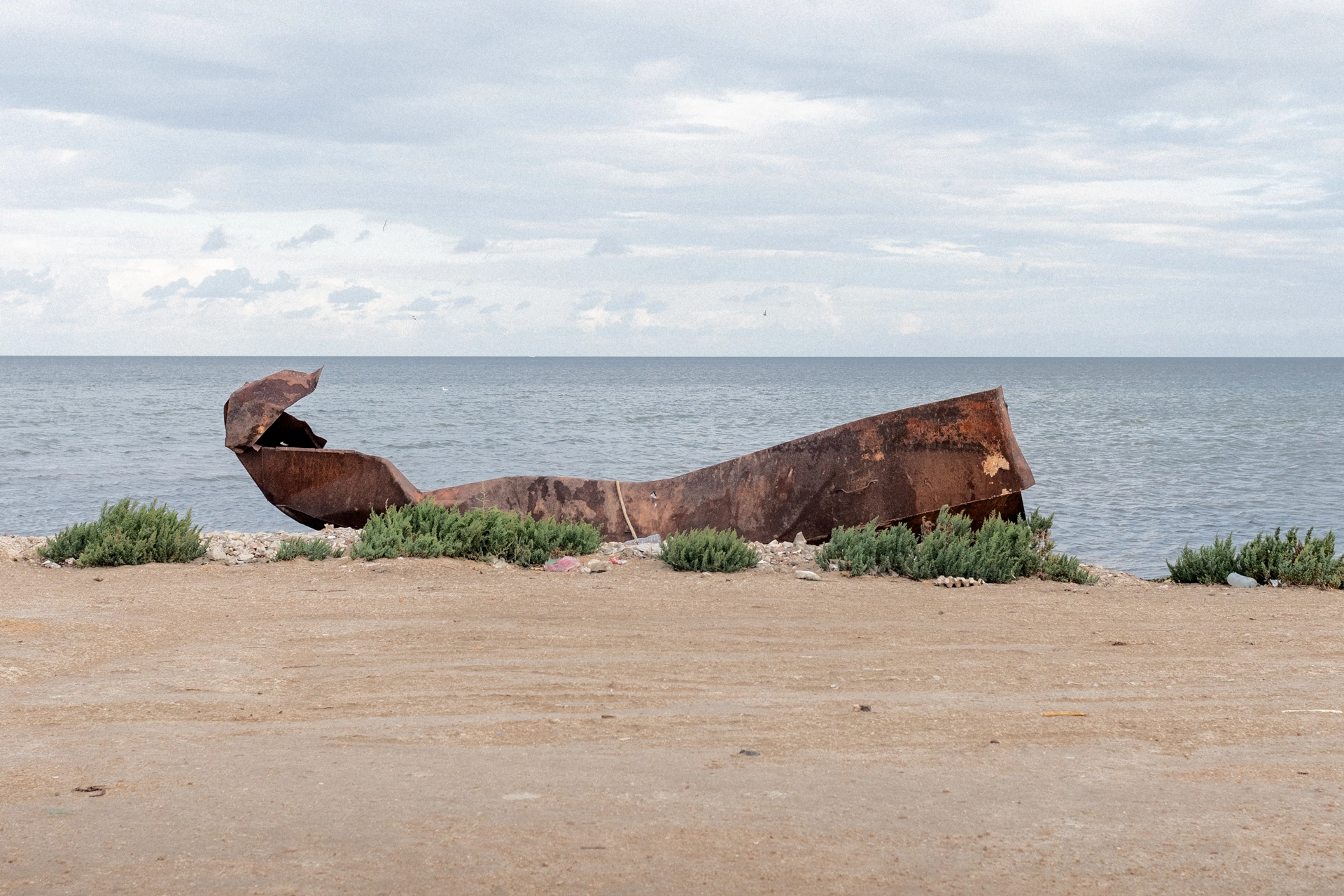
On the evening of April 5th, the sea off the coast of Sfax – Tunisia’s second largest city and a large port in the centre of the country – is calm and the air temperature is average. These are good weather conditions to attempt the crossing. Sfax is in fact the main starting point of the route from Tunisia to Lampedusa, one hundred kilometres further north.
The countryside surrounding the northern part of the city centre is the area that has seen the most departures of migrants of sub-Saharan origin in recent years. A shallow, smooth coast on one side, and stretches of olive groves in a sparsely populated area on the other, where migrants have set up several makeshift camps.
The investigation in a nutshell
- On April 5th 2024, a flimsy metal boat with 42 people on board from Gambia, Guinea and Sierra Leone sank off the coast of Sfax. These boats are very common along the coast, made by Tunisian mechanics who sell them at affordable prices
- The Tunisian Garde nationale is accused by the survivors of having caused the shipwreck, first by carrying out a series of deterrent manoeuvres, then by ramming the boat and hitting the migrants on board. At least 15 people died
- During 2023, several local and international civil society organisations accused the Tunisian authorities of carrying out violent operations at sea, causing shipwrecks and drownings
- For years, the EU and individual member states have been funding the Garde nationale. On 19th June 2024, Tunisia declared its own search and rescue zone with the support of Brussels. The EU has never taken an official stance on the violations along the Tunisian route
Off the coast
On the evening of April 5th, at least four separate groups, about 200 people in all, set off at different times in boats. These are very unstable, built with thin iron plates in repair shops by Tunisian mechanics specifically to allow migrants to leave. At La Louza, some 40 kilometres north of Sfax, there are dozens of them piled one on top of the other: a ship graveyard rusting away in the sun.
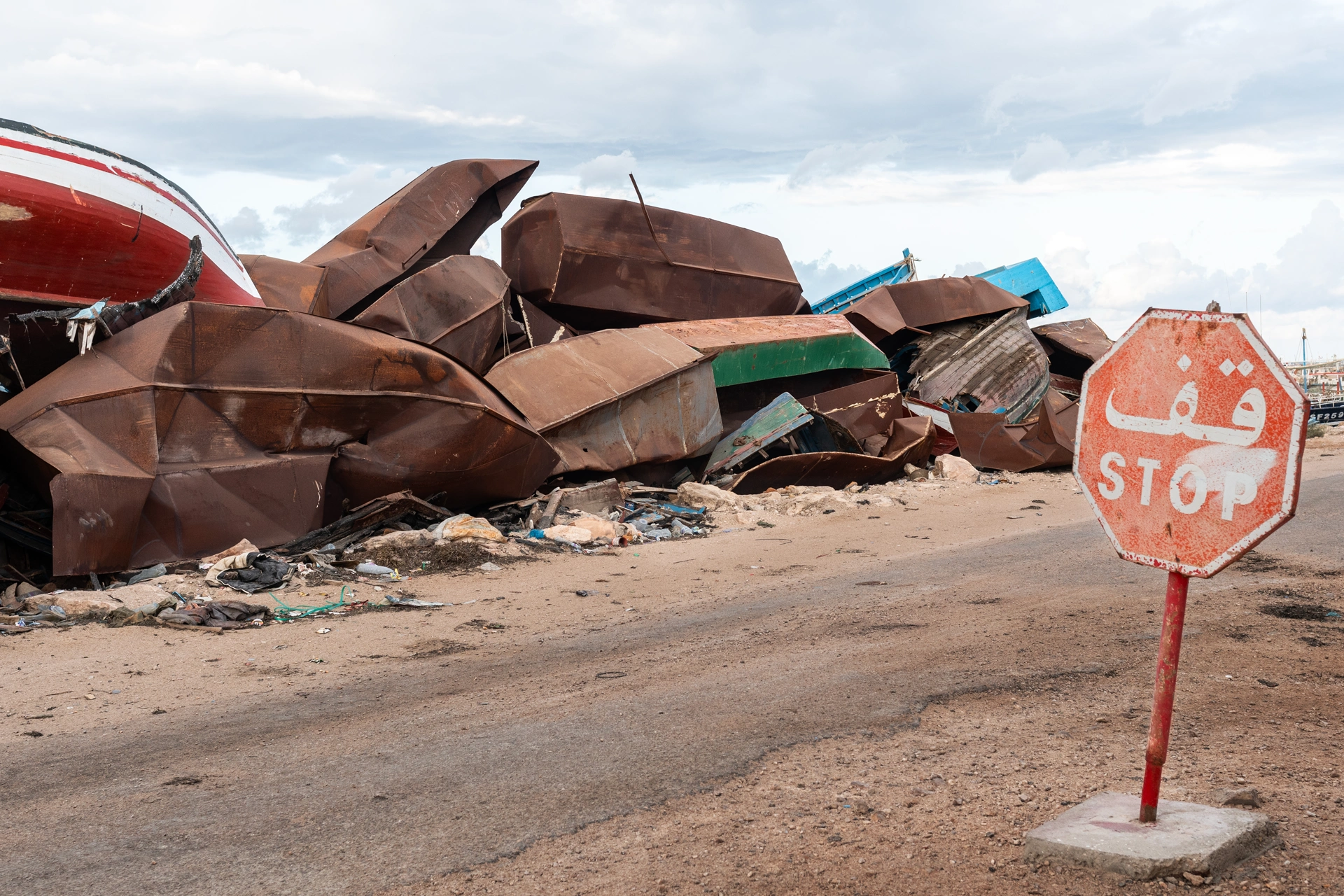
Three such boats eventually take to the sea. On the last one are 42 people from Gambia, Guinea and Sierra Leone. The boat is about eight metres long, with very narrow spaces, and there are pregnant women and eight minors on board. It leaves the coast of Sfax at around 7 pm hours local time. The sun has only just set but the light is already very dim.
Tear gas rains down on the passengers: Tunisian law enforcement are trying to prevent the migrants from leaving the coast. Some shots land in the water, others reach the boat, but someone from inside promptly tosses them overboard. The panic seems to be over, as the coastline becomes smaller and smaller with each passing minute.
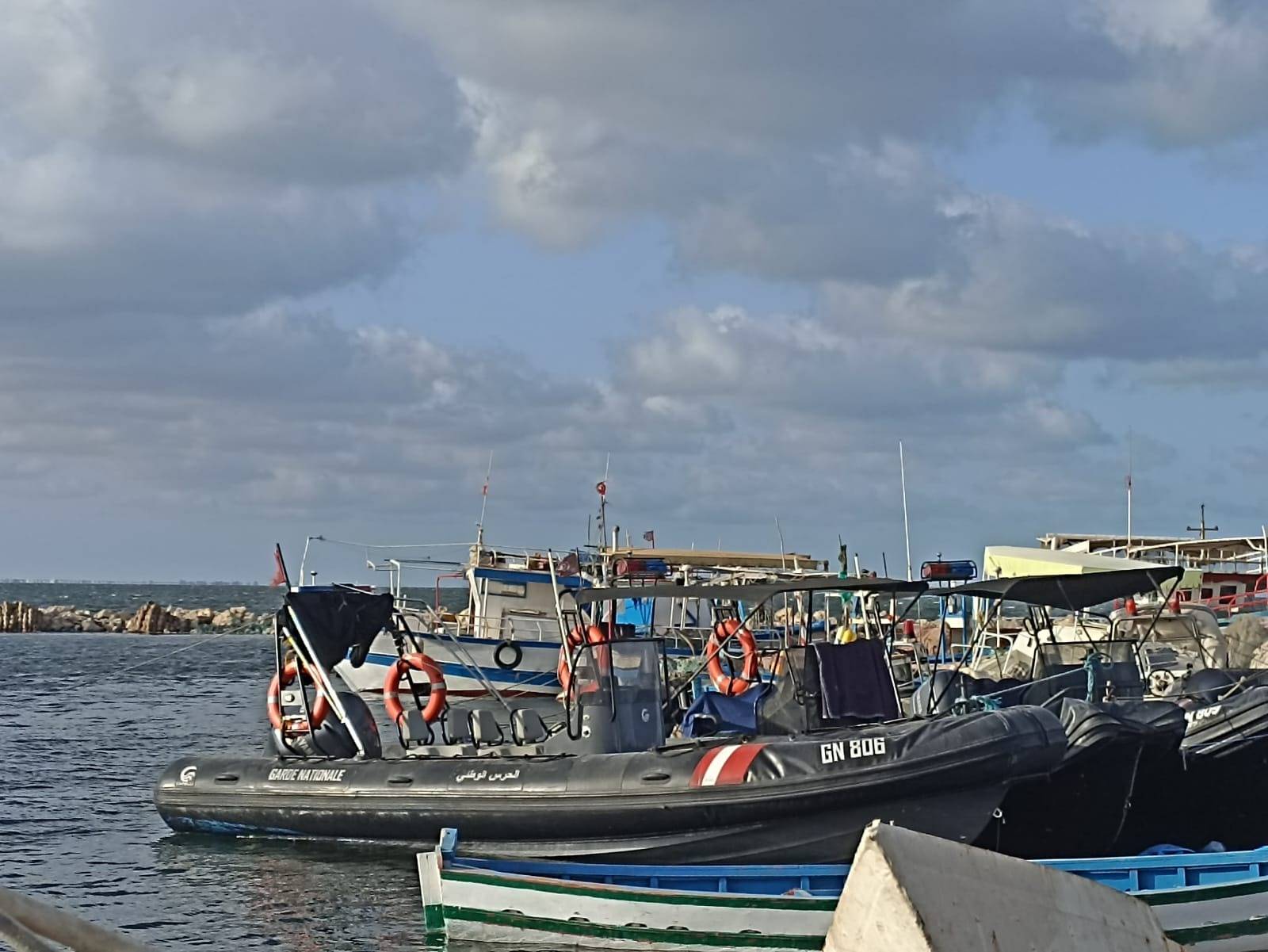
After another brief stretch, the situation precipitates. Two black Garde nationale rubber boats, possibly donated by Germany as part of the migration cooperation between the two countries, according to some diplomatic sources, approach the migrants. One starts to draw circles in the water around their boat, three times, to produce waves.
Sostienici e partecipa a MyIrpi
It is a widespread practice, sometimes even used strategically to document the Tunisian authorities’ ability to intervene.
Survivors
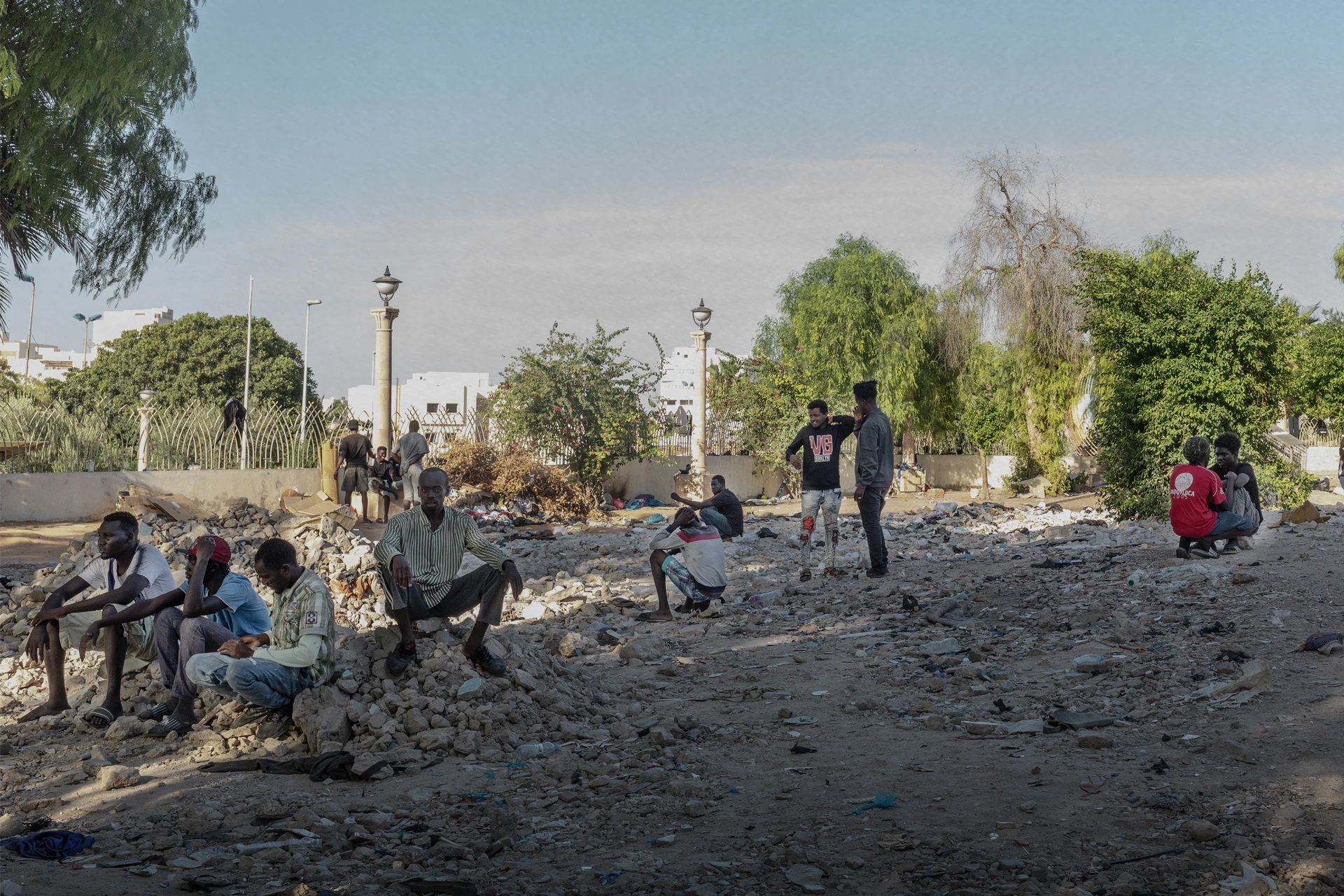
We can know what happened on the night of April 5th thanks to those who survived the shipwreck. The various testimonies, collected at different times, agree on the details of the events, the means that the Garde nationale used at sea and on land, and the identification of the casualties through archive photos: seven minors, six women and two men. The identity of the casualties makes it impossible to reduce the incident to a “ghost shipwreck”.
While in the central Mediterranean route the presence of NGO ships has played a major role in witnessing the violent methods of the Libyan coast guard, in Tunisia there is an almost total lack of images or documentary evidence that can verify the causes of shipwrecks or incidents at sea. There are, however, the words of the survivors.
This context also helps to explain the discrepancies concerning the numbers of casualties. In the case of the April 5th shipwreck, for instance, the Garde nationale reports having recovered 13 bodies during rescue operations, while IrpiMedia was able to reconstruct the identity of 15 people. Survivors also claim there were 24 casualties in total.
These conflicting versions are often due to local authorities’ obstruction in the identification of the bodies. One survivor of the shipwreck reports that he asked some officials if he could take photos of the bodies to send them to the families in their countries of origin. The answer was a categorical ‘No’.
Reconstructing the April 5th shipwreck
- Individual face-to-face and telephone interviews with survivors to compare the different versions of the shipwreck
- Comparison of testimonies with videos shared on social networks about previous cases in which similar techniques were used
- Satellite image of the port of Sfax – taken by Placemarks – from 6 April. About 100 people can be seen sitting or lying on the pier in front of some Garde nationale vehicles
- Official statement from the Tunisian authorities saying that they had prevented several departures and recovered 13 bodies at sea
“I had never seen a boat hit another one deliberately. I had heard many stories about it but this is the first time I have it witnessed it with my own eyes.”
Several weeks have passed when Ibrahim (not his real name) recounts the details of the shipwreck. He would rather not disclose his identity, or even where he is based at the moment. However, one only has to look at his gaze as he talks about April 5th to feel the burden of grief he still carries with him today.
Born in Sierra Leone, as he recounts what happened that night he uses two mobile phones arranged on the ground, one in front of the other, to show the positions of the boats at sea
“Our boat broke down after being rammed by one of the two black rubber dinghies. When we had been in the water for about 30 minutes, the police realised that people were dying. At first they rescued six people, including me, and started to move us to other Garde nationale boats until we reached the port of Sfax.”
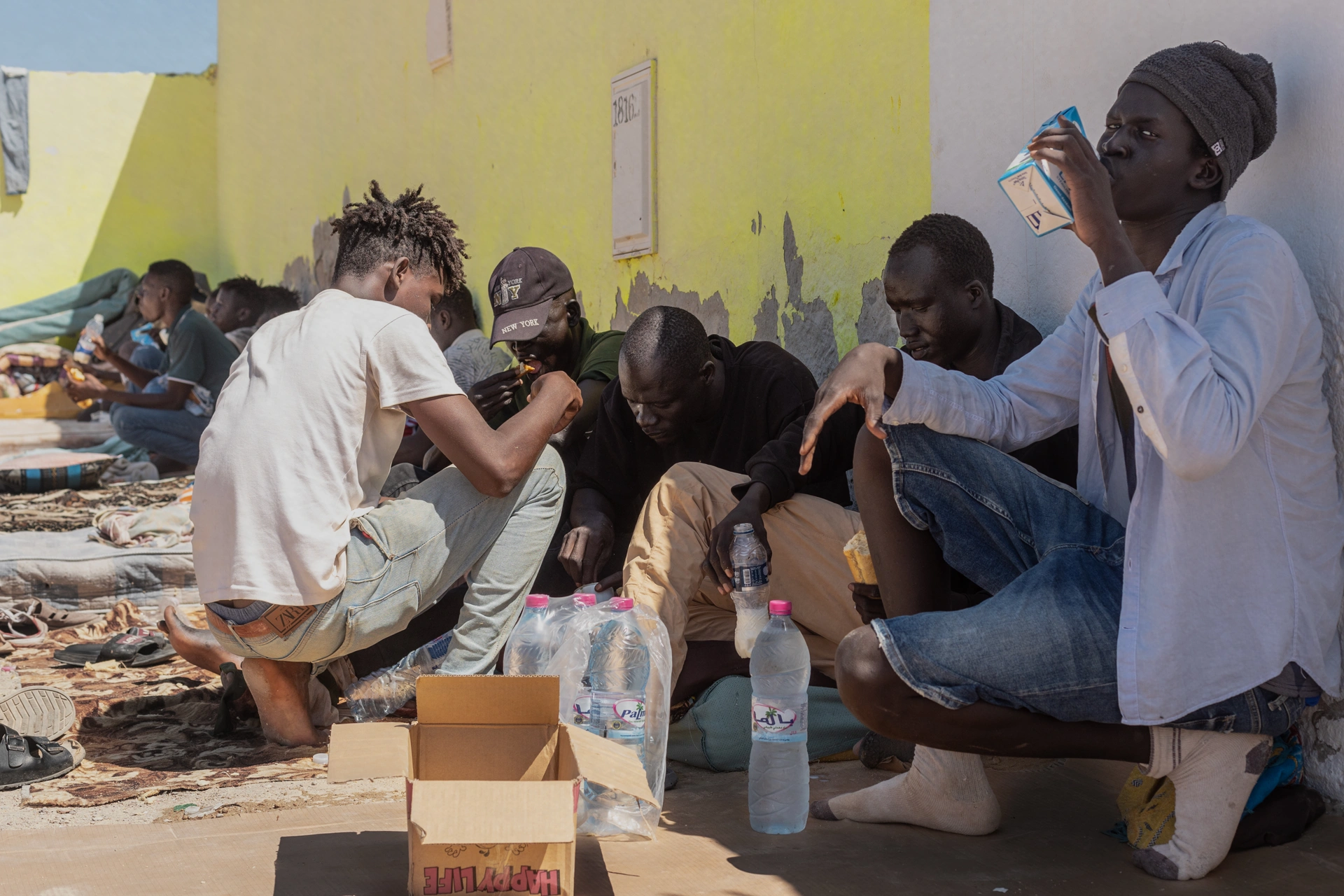
As Ibrahim tells the details of that night – from the tear gas to the beating at the hands of the coast guard, from the shipwreck to the arrival at the port of Sfax – seven-year-old boy is listening to him, completely captivated by his words. He is the only child who survived the 5 April massacre. He lost his mother that night:
“After the boat sank, I swam with him to the dinghy and we saved ourselves”, Ibrahim continues. “Afterwards I pretended to be his brother to protect him. Today, I cannot say that he is fully aware of what happened. Once I saw him crying, I asked him why but he could not give me an answer. He only said that maybe it was because his mother had died. It broke my heart”, he confides.
Thanks to the images sent in real time by Ousman, it was possible to locate exactly where and when the group of people was loaded onto buses and abandoned in Libya.
Suspicious shipwrecks: the data from NGOs
As the number of departures from Tunisia has increased in recent years, testimonies have also multiplied from those who claim they were intercepted at sea through violent methods that have led, directly or indirectly, to the death of migrants: tear gas, deliberate ramming and obstructions that have caused the flimsy metal boats to capsize, as they cannot withstand strong waves, especially when overloaded.
After the SAR zone was established on the eve of World Refugee Day, Alarm Phone, a NGO that provides support for people in distress crossing the Mediterranean Sea, has published Mare Interrotto, a collection of 14 testimonies from 2021 to 2023 recounting both the shipwrecks caused by the Garde nationale and the kind of illegal operations carried out at sea by Tunisian authorities.
On July 21st 2021, a dangerous manoeuvre led to the capsizing of the boat; there were 31 survivors, 29 people missing and 15 bodies found.
In other cases, there were reports of physical threats with firearms, use of tear gas, delays in rescue, deliberate ramming, engine theft and deportation into desert areas following capture at sea.
Stories closely resembling the shipwreck of April 5th were confirmed by videos circulating on social networks in 2023 and 2024. These operations nearly always take place in the same stretch of sea between Sfax and the Kerkennah archipelago, extending north to the city of Mahdia.
A Garde nationale vessel deliberately rams a metal boat with dozens of migrants on board.
According to the testimony of survivors, a similar technique was deployed in the shipwreck on April 5th.
Following a shipwreck, dozens of migrants try to board a Garde nationale patrol boat.
The video was made by a migrant on board a larger ship.
A Garde nationale officer beats migrants with a wooden stick.
Several testimonies report that Tunisian authorities routinely beat migrants with sticks and clubs.
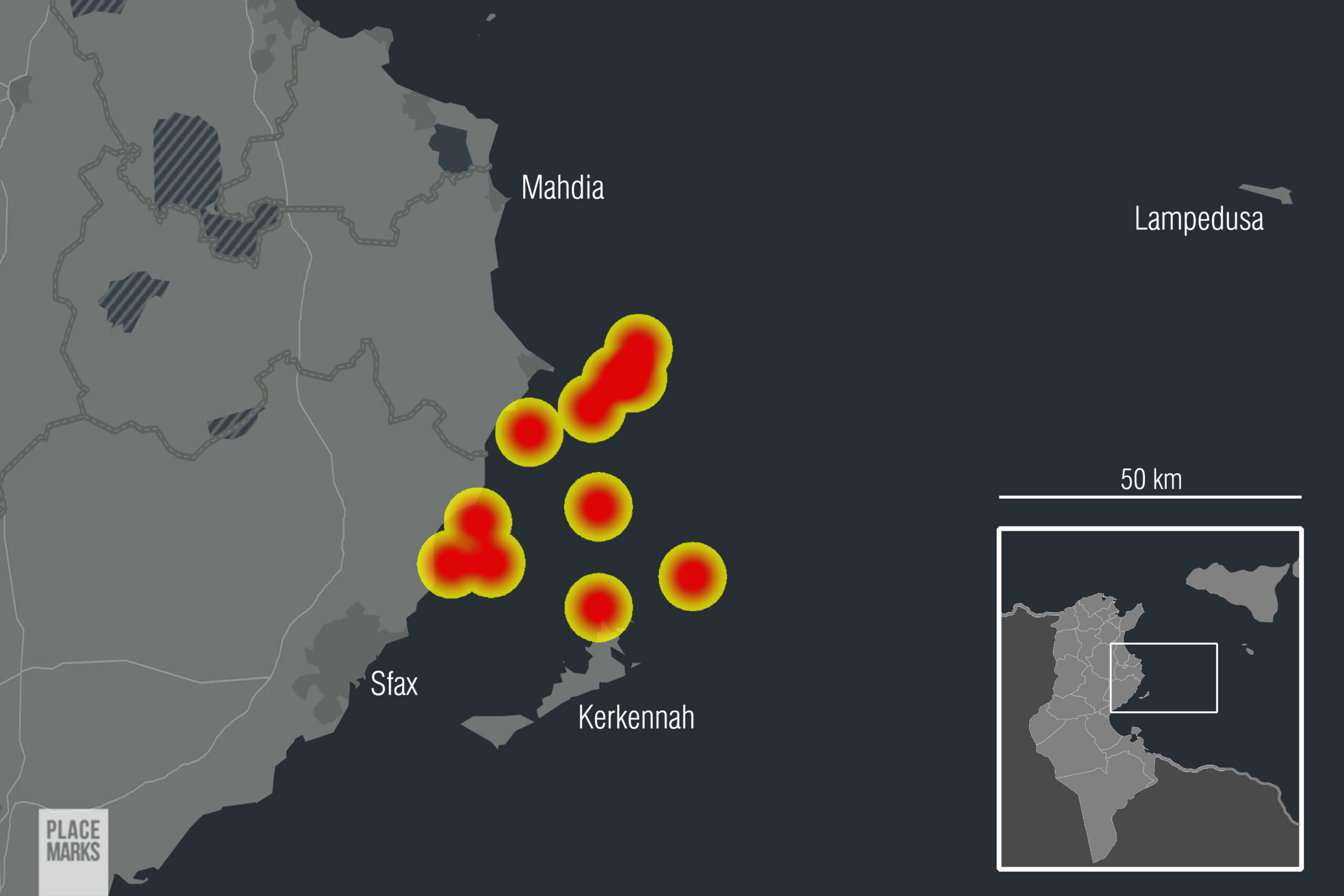
Shipwrecks occur in coloured areas © PlaceMarks using data from Alarm Phone and IrpiMedia
A Garde nationale vessel deliberately rams a metal boat with dozens of migrants on board.
According to the testimony of survivors, a similar technique was deployed in the shipwreck on April 5th.
Following a shipwreck, dozens of migrants try to board a Garde nationale patrol boat. The video was made by a migrant on board a larger ship.
A Garde nationale officer beats migrants with a wooden stick. Several testimonies report that Tunisian authorities routinely beat migrants with sticks and clubs.
Shipwrecks occur in coloured areas © PlaceMarks using data from Alarm Phone and IrpiMedia
Now that the SAR zone officially exists, Tunisia can also leverage its European partners to increase the number of vessels that can intervene in a shipwreck, even those not involving migrants. The organisation of search and rescue operations is detailed in Decree Law 181 published in the Official Gazette, coincidentally, on April 5th 2024.
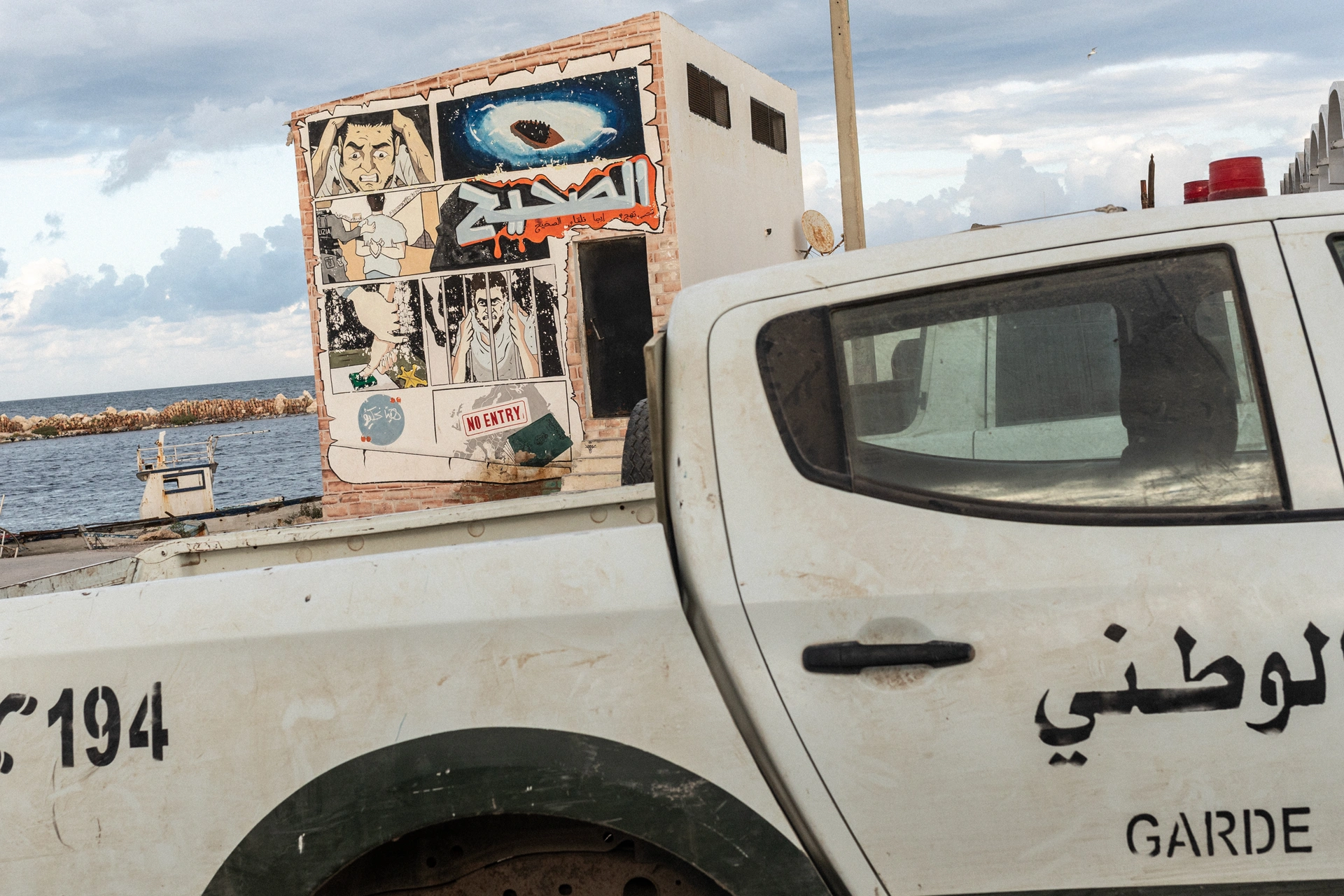
Tunisia and Libya: European funding for the Coast Guard
In Libya, the Coast Guard has a fragmented command structure over which the Ministry of Interior in Tripoli struggles to maintain control. In addition, there are several other maritime authorities linked to other ministries, and militias charged with intercepting migrants at sea.
In Tunisia, by contrast, the Garde nationale is the official corps of the gendarmerie responsible for security – on land and at sea – in rural and peri-urban areas, while the police is in charge of cities. An official state corps answering directly to the Ministry of the Interior, it was established in 1956, five months after the declaration of independence from France.
The Libyan Coast Guard has received substantial financial support from the European Commission since 2017, as 90 per cent of the 180,000 migrants who reached Italian shores in 2016 had departed from Libya. Eight years later, a similar model of border externalisation is being applied to Tunisia, the main departure point for migrants in 2023.
Accedi alla community di lettori MyIrpi