
Argomenti correlati
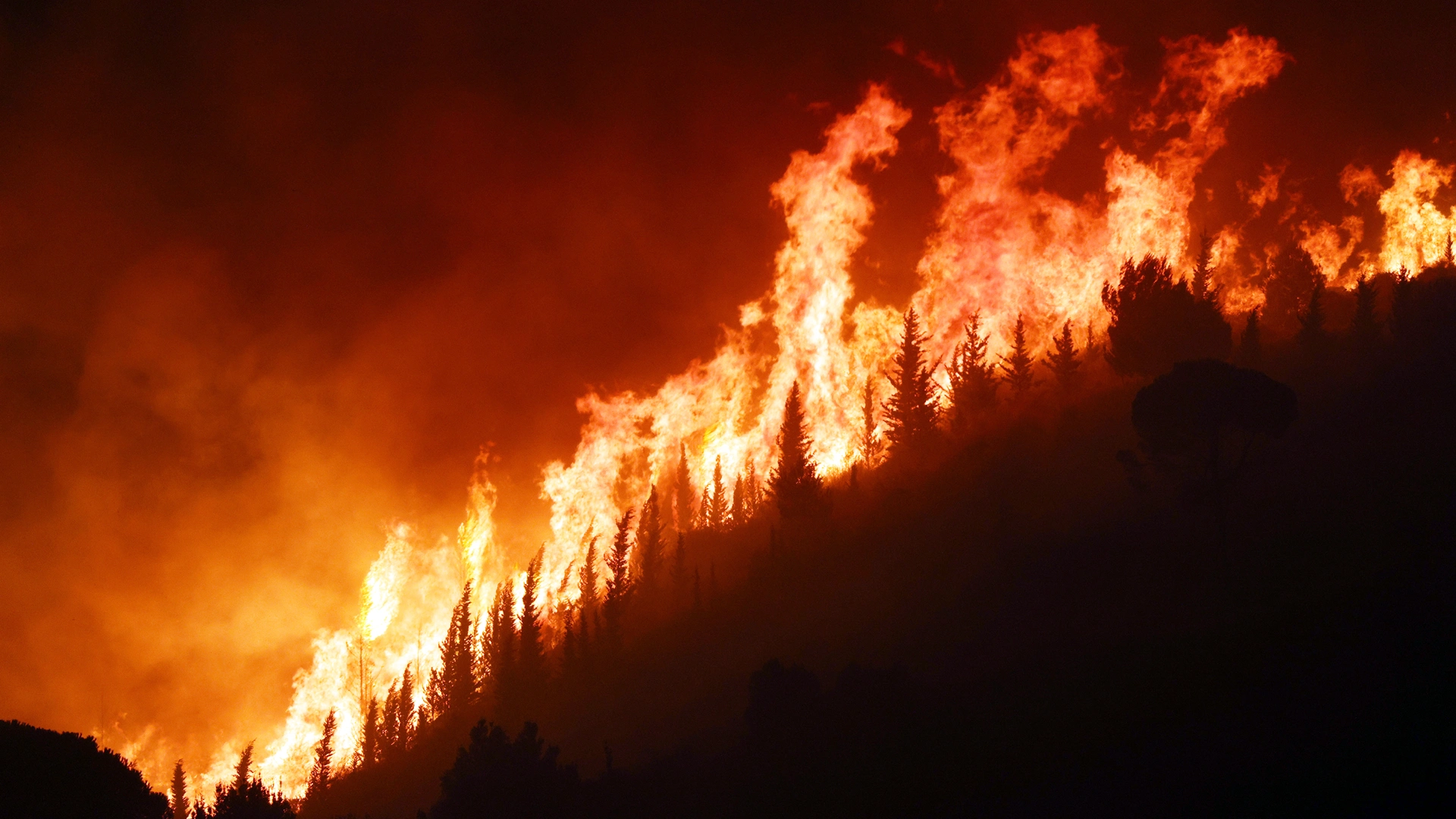
“If you see an arsonist, call 1515 (national emergency number) immediately. Together we can put them out”. Throughout the summer, via road signs, ads purchased in print and online newspapers, and social network posts, the Sicilian Region tried to raise awareness among the population about fires: a scourge that historically affected the island in the hot season, but which recently, partly due to climate change, has become a year-round occurrence.
The investigation in a nutshell
- Despite the adoption of new technologies, fires in Sicily remain a constant threat, ravaging the island and causing fatalities for years. The smoke from the forests metaphorically clouds the government brains that should decide on solutions.
- The search for a common criminal plan behind the fires has no solid basis, and prosecutors believe it is the final result of a chain of failures and omissions on the part of those who are supposed to take care of the territory in various capacities.
- The fire cadastre, essential for monitoring burnt areas and preventing abuse, is often ineffective. Mismanagement by city councils, poor data accessibility and the exclusion of important fires limit its usefulness.
- Data obtained by IrpiMedia show that drones in Sicily have failed to prevent fires or catch arsonists as promised. They are used for post-fire assessment and then given to other military and civil organisations.
- In 2022, a company gave the region the opportunity to test the use of powerful thermal imaging cameras, capable of intercepting trigger points with a small margin of error, free of charge. The trial, however, lasted only a few months.
- Some 15,000 seasonal workers are tasked with combating fires, without any technology. The unions are seeking to give them more security, but the workers have also been accused of playing a role in setting fires.
“With this campaign we want to join forces to protect what belongs to us: our land, our wildlife and the future of the generations to come,” reads insiemelispegniamo.it, a website that is part of the awareness-raising initiatives financed by the Region to the tune of 800,000 euro. Annually, the total budget for implementing the fire-fighting plan is about 75 million euro. Yet, no matter how complex and widely sponsored, the system of prevention and repression has failed to yield the desired results. The history fires in Sicily is one of quick fixes and ineffective solutions for an increasingly damaged territory.
The international series #BehindTheFlames
This article is part of an international series published in partnership with Euronews and New Lines Magazine. #BehindTheFlames is an investigation into the origins of fires in both Italy and Turkey (where it was carried out by Sofia Cherici and Aylin Elci) and was conducted thanks to the support of the Journalismfund, which allowed journalists to go into the field. Further investigation into the use of drones in firefighting was made possible by additional support from Privacy International.
A survey carried out between 2010 and 2020 by the Forestry Corps, the regional department that in Sicily (as well in the other autonomous provinces and regions with special statutes) is responsible for 1515, shows that at least 70 per cent of the fires are rson. Between July and August 2024, there were times when the entire island was burning at the same time: 18 fires on 15th July (seven in Catania, five in Enna, two in Palermo, one in Messina, one in Ragusa and two in Syracuse), eight fires a month later (two in Catania, two in Syracuse, one in Ragusa, one in Agrigento, one in Caltanissetta and one in Messina).
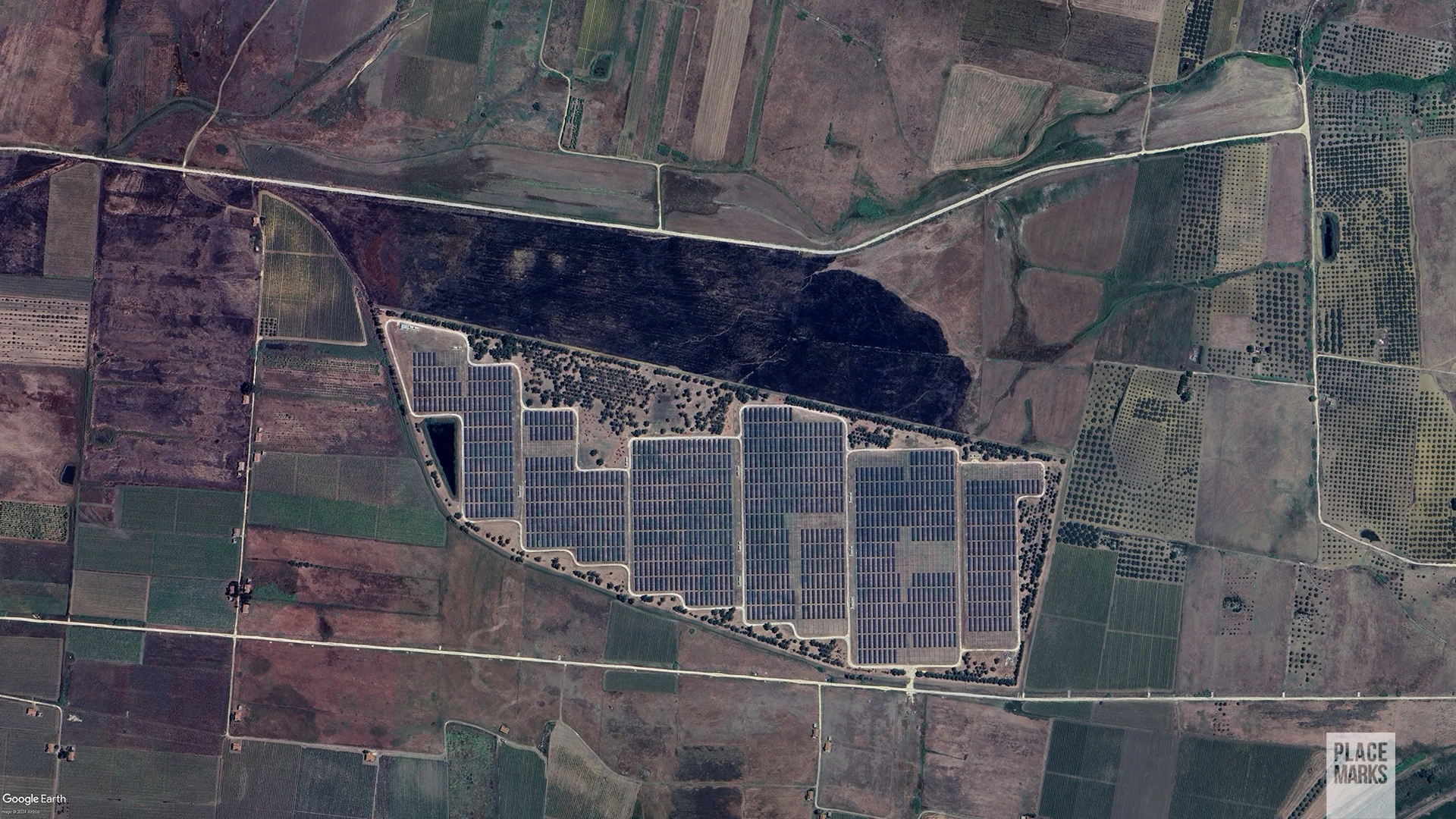
There is, however, no investigative evidence of a common matrix, nor on what the motive could be: “To think that Cosa Nostra could be behind the fires at the present time is merely a suggestion”, said one of the island’s chief prosecutors. “To date, we have never had any hints or clues leading us to believe that the fires that plague Sicily every year are the result of a concerted action by the clans”. Furthermore, punishing the arsonists is only part of the solution: “Thinking of stemming the phenomenon with repression”, another prosecutor said, “is an illusion: anyone can buy a lighter. That is why we have to look at the chain of responsibility”. “The feeling,” echoed another prosecutor, “is that the damage caused to the environment is mainly the final result of a chain of failures and omissions on the part of those who are supposed to take care of the territory, in various capacities”.
The figures
The total number of fires on the island – including forest fires, ‘urban-rural interface’ fires, vegetation fires and the intentional burning of plant residues – did not exceed ten thousand only in one year between 2016 and 2022. According to data obtained by IrpiMedia, in the first ten months of 2024 there were over 6,300 fires. Further confirmation that Sicily is a unique case in Italy came from the Istituto superiore per la protezione e la ricerca ambientale (ISPRA), according to which 45 per cent of Italy’s burned areas between January and July were in Sicily.
In terms of surface area, tens of thousands of hectares have been incinerated: between 2010 and 2020, the average was 21,555 hectares per year, about 30,000 football pitches. The damage has often affected areas that are officially protected: more than ten per cent of the region’s territory falls within a park or nature reserve. Looking at forested areas alone, the figure exceeds 20 per cent of the total, regardless of their level of protection.
The extent of the fires in recent years and their consequences on the territory have also resulted in several deaths. In July 2023, in the Palermo area, firefighters found two charred bodies inside a house that had gone up in flames, and less than 36 hours later, another woman died an ambulance was unable to rescue her because of the flames.
The national law on how to fight fires dates back to 2000. It introduced forest fire as a felony into the criminal code, with penalties of up to ten years, and also regulates with the so-called fire cadastre. Sicilian municipalities are required to map fire-affected areas within their territory every year. In 2023, however, the Region tasked commissioners with updating, or in some cases, establishing the cadastres in 145 of the 391 municipalities on the island; 97 in 2024 alone.
Italy’s legal frameworks for forest fires
Italy has long been in dire need of laws against fires and arson. As early as 1975, a law introduced the first prohibitions on the use of burnt land. The law was designed to prevent the exploitation of wooded areas by developers.
In the mid-1990s, following several decisions by the Council of State that had deemed some prescriptions illegitimate, and keenly aware of the increasing threat, Parliament began working on new rules. It took four years to pass, but to this day Law 353 of 2000 is the legal framework that regulates activities to fight forest fires.
Article 10, the one that deals with prohibitions, states that forest and pasture land that has burnt down may not change use for 15 years, with the exception of work necessary to safeguard public safety and the environment. For ten years, it is illegal to build any type of constructions, with the exception of those for which ‘the relevant authorisation or license has already been issued, at a date preceding the fire and on the basis of the urban planning instruments in effect at that date’. The same ten-year ban applies to grazing and hunting, while the ban on ‘reforestation and environmental engineering activities supported with public financial resources’ lasts five years, with a few specific exceptions.
The appointment of the special commissioner is “an additional expense for the community”, explained Emiliano Farinella and Martina Oddo of Fenice Verde. The organisation is one of to the 222 volunteer groups registered in the regional civil protection list and equipped – according to the regional fire-fighting plan – with people and suitable means “to carry out the activities of fire spotting, extinguishing small fires, and assisting the authorities in extinguishing forest and interface fires”. Many activists have networked to monitor the territory during the most dangerous times of the year.
In 2022, a collaboration was signed between the Region, volunteers and the Forestry Corps, which established how citizens could report fires. The experiment, however, was not renewed in 2023, against the hopes of the civil society groups.
Fenice Verde has launched an initiative to analyse the individual fire cadastres, calling on residents to point out discrepancies between what is shown on the maps and what actually has happened on the ground. By 31 July each year, citizens can review the temporary versions of the fire cadastres that municipalities must make available to the public. Unfortunately, the volunteers explain, the data is often presented in formats that are difficult to access or navigate. Citizen verification is an important step to prevent omissions in the registers that can result in the appointment of a commissioner, following an inspection mandated by the Region.
Under the current law, in order to draw up the fire cadastre, municipalities must draw on the data owned by the State Forestry Corps, which since 2016 has merged with the Carabinieri throughout Italy, with the exception of the Autonomous Provinces of Trento and Bolzano and the Regions with a special statute such as Sicily, where a regional Forestry Corps has survived. The Corps has made a geoportal available to municipal offices, from which they can acquire the “perimeters of the fire-affected areas surveyed, also in vector format”.The documentation, however, appears to be far from exhaustive. In late 2023, a number of groups that formed a fire-fighting committee in Syracuse questioned the completeness of the data in the possession of the Forestry Corps.
“Last year the region sent a special commissioner to replace the local authority and complete the updating of the cadastre for the period between 2018 and 2022. But if we had not intervened, some of the large fires that had occurred in areas of particular value, such as reserves and archaeological sites, might not have been documented, even after receiving extensive media coverage”, Santi Zocco, a member of the committee, told IrpiMedia.
Concerns over the possible incompleteness of the data were confirmed by the Forestry Corps itself in a statement to the city council. The corps said it could not discount the possibility that “some of the fires had been suppressed by other groups”.
It is not uncommon for firefighters to tackle fires in forests that are close to urban areas.
The (false) promise of technology as a deterrent
In 2021, under President Nello Musumeci, the Region had resumed its ‘war’ on fires by purchasing the first drones. In October 2023, as Minister of Civil Protection, Musumeci restated his solution: “The activities of arsonists and pyromaniacs must be controlled by the authorities and law enforcement must be deployed immediately, as has happened in some cases”.
Over the last three years, however, between purchase costs, insurance coverage, and training for pilots, the region has spent about 290,000 euros, a residual amount out of the 75 million total budget each year. The Region has requested insurance cover for the piloting of 101 drones owned by the Forestry Corps for the period from August 2024 to August 2025. Almost all of them are small drones made by the Chinese company Dji, some of the most popular drones in the world, while two of them – solar-powered and specially equipped for fire monitoring and land surface mapping – are manufactured by the Italian company Vector Robotics, which has also sold surveillance drones to the Ministry of Defence.
Vector Robotics FH0

- 1,21 Kg
- 8 hours autonomy
- videocamera, thermal sensor
Dji Mini 3 Pro
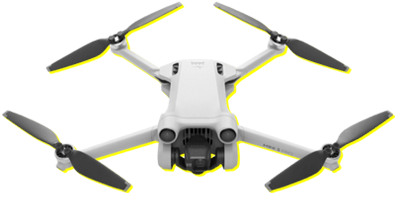
- 250 g
- 34 minutes autonomy
Dji Mavic Mini 2
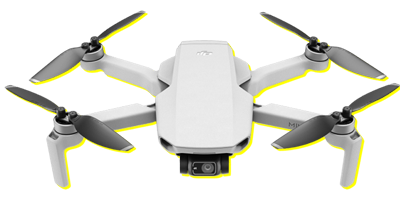
- 250 g
- 31 minutes autonomy
- videocamera
Dji Mavic Enterprise Advanced
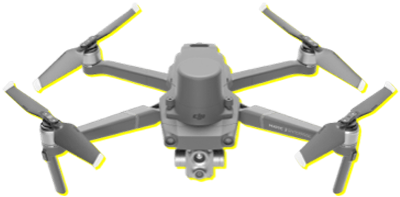
- 1,1 Kg
- 24-31 minutes autonomy
- thermal camera
Following a general civic access request (FOIA) to the Forestry Corps, IrpiMedia discovered that in 2022 only two fires (and two perpetrators) were detected thanks to drones, while in 2023 only one fire and one perpetrator were detected. During the same periods, around ten thousand fires per year were recorded on the island.
There is a disconnect between the stated aim of using drones and their actual ability to solve the problem for which they were purchased. The result is that after the first proclamations, the Region corrected its course: Elena Pagana, then Councillor for Land and the Environment, admitted during a session of the Sicilian Regional Assembly on 31 October 2023 that, instead of being used as a tool for hunting down arsonists and for the rapid detection of fires, drones are mostly deployed to calculate the wooded area covered by fire and to help with the planning of extinguishing operations. But they are not used only on fires, Pagana explained. They are often deployed in cooperation with other military and civilian groups for activities as diverse as locating illegal dumps, supporting the Carabinieri in the search for missing persons, and for the discovery of a cannabis cultivation in a joint operation with other police forces.
In August 2024, Pagana stepped down as a councillor.
A different strategy: Sardinia
Sicily and Sardinia have adopted different approaches in narrating the use of drones. In Sardinia, according to the regional fire-fighting plan for 2023-2025, drones will be used on an experimental basis for surveys of fire-affected areas to be included in the cadastre. There is no reference a hunt for arsonists. In its reply to the FOIA request submitted by IrpiMedia, Sardinia’s Corpo Forestale e di Vigilanza Ambientale (Cfva) explained that “drone flight activity is not used by the Cfva for the detection of fires”, and the same applies to the detection of subjects potentially guilty of arson in the same time frame.
In total, there are 167 operators qualified to fly drones, and the Forestry Corps has 84 vehicles. The number of flight hours increased from almost 20 hours in April-September 2022 to over 131 in the same period in the following year. The tenders for the purchase of the drones specify that they are also used for the suppression of crimes against property and landscape. The Forestry Corps also acts as judicial police in environmental matters.
Regarding the actual use of drones, in its reply to the FOIA request the Forestry corps explained that the operators “do not communicate the duration of the flight but only the number of flights carried out”, noting however that drones “produce a great deterrent effect and are therefore extremely persuasive against any malicious intentions”. The deterrent value of drones is also mentioned in the Regional Forest Fire Plan for the 2023-2025, yet the statistics on the number of fires do not seem to show any real impact.
Ernesta Morabito, vice-president of the organisation Italia Nostra, monitors the territory to report fires together with volunteers from several groups, but has never seen drones in flight during her activities. It is likely, she observes, that those purchased by the Region “are not the right ones”. She believes that the technical specs of Dji commercial drones for the retail market make them unsuitable for the weather conditions found when a fire breaks out. They also have short battery lives and must be brought to the field by an operator. In contrast, “those that are programmed and controlled by a station” would be more suitable because they could “even fly at night”.
In 2022, with only a few months left before the end of the Musumeci legislature, the Region signed a protocol for a ten-month experiment – the Skanderbeg project, named after George Castriota, the national hero of Albania – where a series of thermal imaging cameras would monitor 24 hours a day, seven days a week, certain areas of the region particularly vulnerabile to fires. In theory, the project was just what the organisations were asking for.
The cameras, costing $250,000 per unit, are made in China, and according to the manufacturers are capable of covering a radius of 52 kilometres, with a margin of error of twenty metres. They are also used by the military for other purposes, such as missile tracking. In the event of a fire being detected, the thermal imaging camera triggers an alert system that immediately scans the number plates of all vehicles in the vicinity, in order to trace potential perpetrators.
Despite a promising start, the experiment lasted only a few months, with only one thermal imaging camera deployed “in an area that also included mountains, therefore with a much smaller radius”, Salvatore Macchiarella, director of Csh srl, the security and investigation company that had signed the protocol, told IrpiMedia. “I don’t know why [the trial] was abandoned”, he added.
In the past, when it was still called Csh & Mps srl, Macchiarella’s company provided its customers not only with thermal imaging tech, but also with actual tracking tools, such as the Trojan used to investigate the so-called P4 lodge in 2011. The company has a long history of cooperation with law enforcement agencies in support of investigations. According to Macchiarella, in the city of Palermo, which has been renting three thermal imaging cameras this year, “we did not see the damage that had occurred in 2023”, in part thanks to their deterrent effect.
This version was confirmed by the city council in a statement in release in late October: “This year, forest fires in the city area have drastically decreased, from 726 to 275. And they were all small fires, which did not cause any major damage”.
The cost of choppers
Helicopters rented to throw water on fires are one of the biggest items in the Sicilian’s region annual firefighting budget. According to data verified by IrpiMedia, the fleet of ten helicopters, introduced in 2018, carried out 695 operations from 1 January to 24 October 2024, totalling more than 15 thousand operations. The provinces where the fleet operated most frequently are Catania, with 142 interventions, followed by Palermo (136) and Enna (123).
Only days ago, the new tender for the rental contract 2025-2026 was unsealed. The Region has earmarked some 13 million euro. The only bidders were E+S Air srl and Helixcom srl, the same companies that have exclusively won the tender for the past six years. Submitting their bids together with Eliossola srl in 2024, both companies are owned by the Citro family, entrepreneurs from Campania who have been active in the sector for years.
However, helicopters have also been criticised by sections of the public in recent years for their technical specifications: on days with strong winds, the very days when fires spread most easily, they can have trouble flying. This is why the last tenders have come with detailed spec requirements.
The need for more high-performance helicopters in the autumn of 2023 was also mentioned by the Region’s President Renato Schifani, who had expressed a wish to expand the fleet with at least two “heavy vehicles”. To achieve this, the Forestry Corps launched a five-million tender, but no company came forward. One of the reasons was allegedly the lack of available vehicles due to the high demand from other territories.
The task of throwing water on the fires, when helicopters are not enough, is also carried out by the National Civil Protection fleet, deploying Canadair Cl-415s and helicopters of different types: from S-64s owned by the Fire Brigade Department to others owned by the Ministry of Defence. From 1 January to 24 October, the national aircraft carried out 356 interventions in Sicily for a total of 3557 operations.
Finally, the regional forest fire-fighting plan for the 2023-2025 includes a sum of 343,181 euro for the use of Carabinieri helicopters.
A scrappy army of rangers
The Sicilian Forestry Corps numbers about 15,000 people, divided into three contingents based on the number of work days the Region can grant them. They are joined by 1,329 permanent workers. The tasks assigned to seasonal workers range from building firebreaks to putting out fires. It is very unforgiving work, especially considering that the average age in the sector is 58.
In the past, foresters have been accused of playing a role in setting fires, as a way to ensure periodic recruitment. This theory has always been denied by the sector’s unions: ”It would be naïve to state that there are no bad apples in a group of 15,000 people, but saying that the fires are started by the workers is ludicrous”, said Maurizio Grosso and Franco Cupane, respectively national and regional secretaries of Sifus Confali, a grassroots union. “We are talking about workers who risk, and sometimes lose, their lives on the job”, not to mention that they know they are paid for a fixed number of days. “The truth is that the region cannot do without the workers – actually, they are needed all year round”, Grosso and Cupane added. Sifus has long been advocating on behalf of the workers_ “Successive governments have done nothing but promise reforms that never materialised, when they should be focusing only on giving them more job security. For years, the entire island has been suffering from the consequences of fires: from desertification to increased hydrogeological risk” the unionists concluded.
All it takes to start a fire is a lighter, “a felony with a very low cost”, as one investigator described it, whose criminal consequences are negligible if one compares the number of fires with the number of people arrested. For the fire to spread, certain conditions are needed, atmospheric and otherwise. In Sicily, these the most worrying: a lack of specialised personnel, a shortage of means, prematurely aborted experiments, climate change and, above all, careless mismanagement. All of these contribute to the general impression that for Sicilian institutions, from the Region to the public prosecutor’s office, fires are an inescapable problem, with no solution.