
Argomenti correlati
It has now been almost two years since the start of the Russian offensive in Ukraine, which has seen the latter resort to a strenuous and ingenious defence of its territory. The invaded country has also learnt to repurpose commercial drones for monitoring and the transport of explosives. As IrpiMedia already reported, this strategy came as a surprise to Russia, which at the time was a few steps behind.
However, over the past year Russia has reorganised itself, first by increasing the use of military drones (not commercial quadcopters, but actually remotely controlled mini-airplanes) supplied by Iran, then by creating its own industry for the production of drones, thanks to the expertise of allies in Tehran – and to components illegally imported from the West.
The investigation in a nutshell
- Iranian-made Shahed-136 kamikaze drones have been a constant presence in Russian attacks against Ukraine, used as missiles to engage Kiyv’s defences
- According to US intelligence and leaked confidential documents, Moscow has decided to start production domestically with the help of Iran. Russia’s drone plants, however, rely on foreign-produced components, despite international sanctions that are supposed to ban their exports
- In addition, Russia wants to exploit the technical capabilities of companies already operating in the field, such as Albatros, which produces drones for agricultural or rescue purposes
- In January 2023, Albatros started developing drones for the military-industrial complex in the same plant where Iranian kamikaze drones were said to be copied
- Albatros also develops advanced algorithms for analysing the data collected by on-board cameras, which are useful for identifying vehicles or equipment on the battlefield
- Sanctions for Albatros came only about a year later: starting in 2024, the United States made sales to Albatros subject to a special licence, and in December 2023, the European Union also included the company in its sanctions list
In July 2023, the British organisation Conflict Armament Research (CAR), which monitors weapons used in war zones, analysed the remains of two Russian kamikaze drones that were found on Ukrainian soil. They Shahed-136s, loitering munitions designed to elude anti-aircraft defences and crash into troops and buildings. According to CAR’s findings, most of the components bore the brands of companies headquartered in China, Switzerland and the United States. Considering the sanctions imposed against Russia, components produced in the West should not have been found. What is more, the analysis confirmed that Russia has started to produce its own domestic version of the Shahed-136.
This is far from an isolated case, which is why Western countries are seeking to tighten export controls of electronic and mechanical components. These parts are often available and can also be repurposed from household appliances or commonly used devices, which can evade export controls more easily than other types of goods. According to experts and analysts, the use of the Shahed has taken on a strategic role. Thanks to their practicality and low cost, they are useful in keeping Ukrainian defences under pressure, forcing Kyiv to waste its own ammo to shoot them out of the sky. This was enough to convince Russia that industries previously dedicated to the production of drones and agricultural machinery could be converted to the war effort. These include Albatros LLC, which was recently included in a new sanctions package.
Game of Drones
This investigation is the second instalment in a special report on the use of drones in conflict zones. It is part of #Sorveglianze, a project by IrpiMedia, in collaboration with Privacy International, on the surveillance industry and its implications, in peacetime and in wartime. Here is the first instalment on the Ukrainian drone industry.
Between a drone and a missile
Russian drone attacks against major Ukrainian cities have been constant since November 2023. On 29 December 2023, Moscow launched one of its largest offensives, killing 39 people. According to estimates by the Ukrainian president, Volodymyr Zelensky, around 300 missiles and more than 200 drones were deployed over the next three days. On 1 January 2024, attacks hit the cities of Kyiv and Kharkiv. Missiles and drones also struck the Ukrainian capital during the recent visit of the new French Foreign Minister, who promised new support for Ukraine.
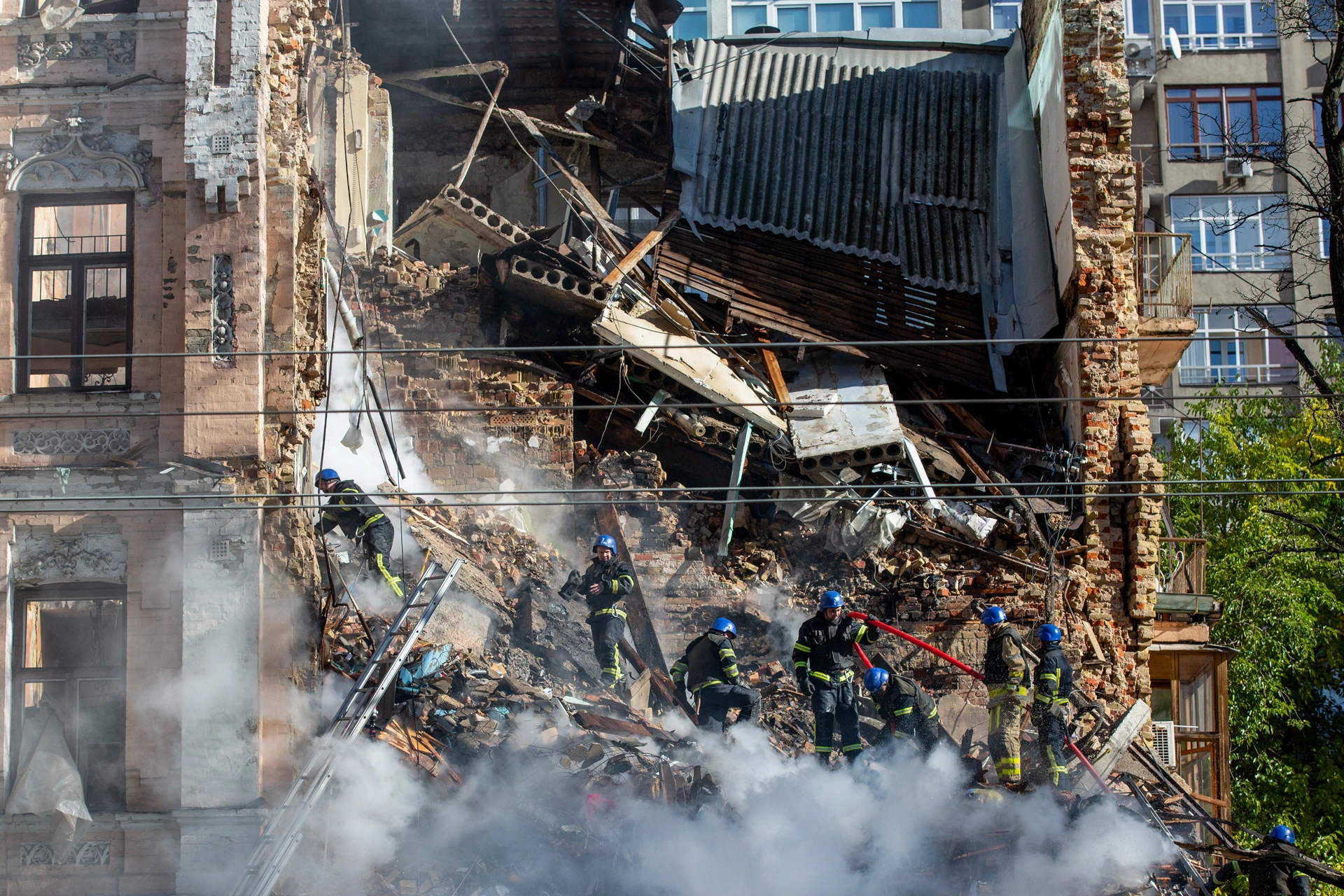
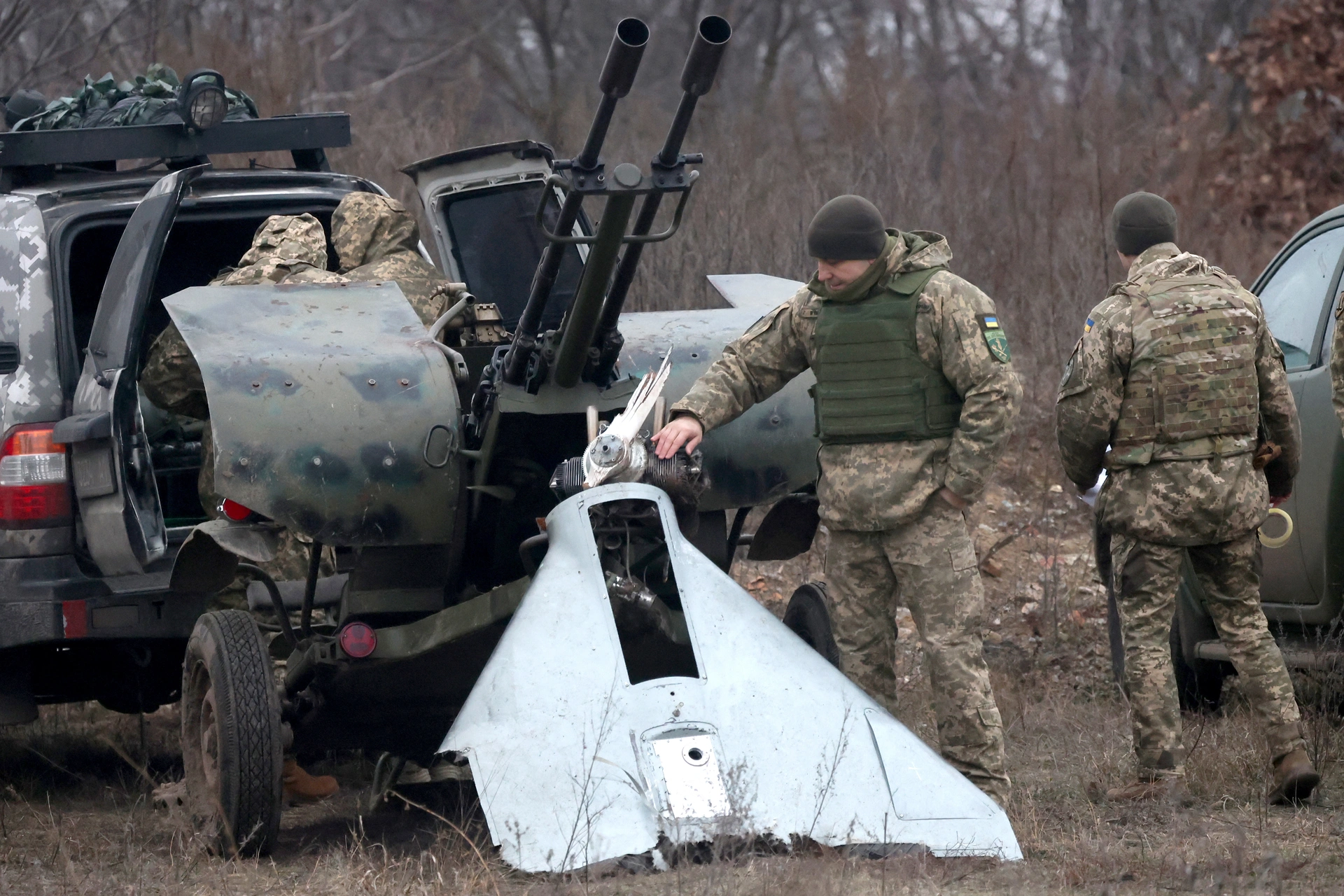
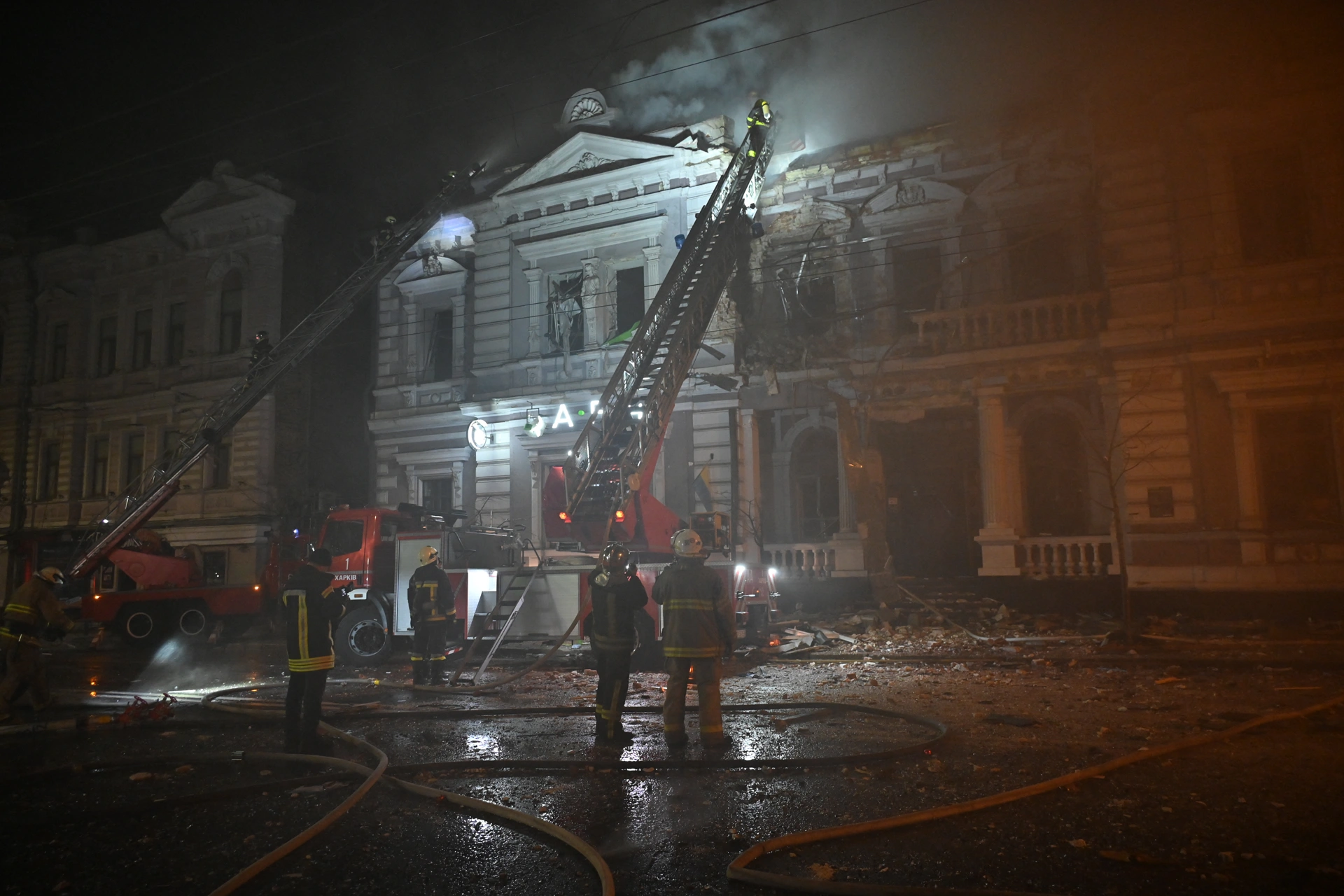
In addition to missiles that can cost tens of millions, Russia also uses kamikaze drones for air strikes. At around $50,000 each, they are relatively cheap weapons, but capable of inflicting considerable damage.
From September 2022 to August 2023, British bomb-tracking research group Airwars recorded 1956 Shahed drone attacks against both infrastructure and strategically important buildings, also resulting in civilian deaths.
In the early attacks, drones were launched in small numbers but have since increased: according to estimates by the Commander-in-Chief of the Ukrainian Armed Forces, 35 Shahed were shot down in one of the attacks in early January 2024.
In June 2023, US intelligence disclosed a plan by Russia to start producing Iranian kamikaze drones domestically, within the Alabuga Special Economic Zone (SEZ). operated by a joint stock, state-owned company of the same name, which benefits from tax and customs breaks provided for SEZs. It is located in Yelabuga, Tatarstan (whose capital is the city of Kazan).
Later, a set of leaked internal documents obtained and analysed by the Washington Post revealed further details: Russia’s goal is to produce 6,000 kamikaze drones by the summer of 2025, on the basis of a cooperation agreement with Iran. Engineers working in the Alabuga plant will be studying Iranian models, with additional support by colleagues in Tehran, and trying to figure out how to copy them and improve some of their parts.
However, there might be a hitch in the production plan: where to get the components.
Sanctions are lagging
According to an inventory found in documents obtained by the Washington Post, more than 90 per cent of the electrical components of the drone system, including the microchips, are said to be produced in the West, particularly in the United States. Only four of the 130 electronic components that are needed to build the drone are produced in Russia.
Reliance on Western components was also confirmed in the case of other Russian reconnaissance drones, such as the Orlan-10. A joint investigation by Der Spiegel to and Airwars showed how semiconductors and microchips produced by German companies ended up in the hands of Russian drone manufacturers thanks to dealers based in non-EU countries, despite existing sanctions. The same is true of a microchip produced by the Swiss company U-Blox, and generally used for satellite navigation, which was found inside a Russian reconnaissance drone. U-Blox’s senior director of business marketing explained to CBS News that these components are not under embargo; they usually for civil usage, and can be officially bought through a distributor.
According to Airwars, many components of the Shahed used against Ukraine are not originally intended for military use and are readily available online. These include microchips to manage the drone’s GPS position and small engines. The wide accessibility of these components makes controlling their use more difficult. Airwars points out that some of these components can also be bought on online shops such as Alibaba. According to another report published by NAKO, a Ukrainian anti-corruption group, the influx of foreign components was already apparent in the first Shahed found in Ukraine: nearly all the components except the engines were produced outside Iran.
The launch of Shahed-136 drone by the Russian army recorded in late 2023 © truexanewsua/Telegram
This is where sanctions from the United States, the European Union and other allied countries come in. In order to target sensitive sectors of Russian military production and limit access to crucially advanced technologies, they have introduced extensive export controls, and updated them progressively in an attempt to keep up with developments on the battlefield. The EU has also extended export controls to drone software and engines, semiconductors and advanced electronics.
«Lists of components must, however, be constantly updated», Francesco Vignarca, campaign coordinator in the Italian Peace and Disarmament Network and an expert on the war industry, explained to IrpiMedia. «There is the risk that a sensor or a camera that is usually exported for other purposes, let’s say for electric gates, might be suddenly integrated on a drone». These components were not initially classified as dual-use items (i.e. items that can be used for both civil and offensive purposes), as such applications could not be envisaged.
Making a mockery of sanctions
When issuing export licences for dual-use items, companies have to disclose the end-user as well as the intended use: if the goods are for military use, clearly they cannot be sold. One of the strategies used to evade sanctions is to lie about the use of the components, as in the case of the dual Russian-German national who was arrested in Cyprus at the request of the US in August 2023. The man was accused of using shell companies in Cyprus and other countries to procure electronic components produced by US companies. The items were invoiced for use in fire security systems and other commercial uses, when in fact the components were destined for Electrocom in Russia, which supplies manufacturers for the military.
Another strategy involves starting a company in the West to export the necessary components. In November 2023, the US Attorney for the Eastern District of New York indicted three people – a Brooklyn resident and two Russian nationals – for violating American sanctions through a Brooklyn-registered company that received over $250,000 from SMT-iLogic, a Russian company known to be involved in the production of military drones. According to prosecutors, the defendants talked via email and chat about how to circumvent US sanctions, using “fictitious” orders to test new supply lines to Russia, and discuss front companies in third countries.
The third strategy is to transit products through non-sanctioned countries and then export them again. As revealed by an Occrp investigation published in May 2023, electronic components and drones are smuggled into Russia through economic corridors set up with Kazakhstan, by companies set up for this purpose by Russian entrepreneurs in the country.
The sanctions target not only components, but also the companies involved. In September 2023, the United States, Australia, Canada, New Zealand, and the United Kingdom published a document with guidelines urging exporters of sensitive components to carry out additional checks on companies outside the Global Export Controls Coalition (a coalition of countries committed to a sanctions regime against Russia and Belarus). In addition to the aforementioned five countries, the coalition includes the 27 member states of the European Union, Japan, Iceland, Liechtenstein, Norway, the Republic of Korea, Switzerland, and Taiwan.
The guidelines point at companies that were founded after the start of the Russian invasion of Ukraine. Even though they had never purchased products subject to export controls, some of them started to request them after 24 February 2022. Others had made similar purchases in the past, but have recently started to order them in increasing numbers.
You can also read
On a more technical side, the European Commission has published a FAQ concerning the sanctions imposed against Russia and Belarus, seeking to provide guidance and support on how to interpret the laws.
Microprocessors and small electric motors are found pre-installed in everyday objects that clearly do not fall into the categories of dual-use items. But they can easily be extracted and used for other purposes, including for the production of drones. When exporting an item that includes sanctioned components, companies have two options: they can either be exempt from the restrictions «provided the transaction is not intended to circumvent» export control regulations, or they can evaluate whether the sanctioned component is the main element of the exported item and can be removed or used for other purposes. It is then up to individual companies to disclose the presence of such components. And it is not clear to what extent national authorities are monitoring this particular case.
Sanction packages, combined with constant updating of parts lists, are used in a bid to slow down and complicate the procurement of useful materials. A total ban on exports would be inconceivable.
As if that weren’t enough, it is also difficult to keep track of new companies. The most recent sanctions packages included a Russian company that was set up in January 2023 in the same Alabuga plant where the Russian kamikaze drones will be assembled. This company, named Albatros, has switched production from agricultural to military drones. A year later, the company was also hit with sanctions.
Albatros: military agriculture
At first glance, the Albatros M5 looks like an oversized toy plane. It has no spinning blades and does not soar vertically. In order to take off, it needs to be launched from a sort of large slingshot planted on the ground.
In a video shared on Telegram in June 2023, the Russian Defense Ministry explained that the unmanned aircraft are supporting the Airborne Division of the Guards, a special force of paratroopers headquartered in the Russian city of Ivanovo. In December 2023, paratroopers were deployed around Bakhmut; in June 2023, drones were also used in Donetsk Oblast, in the Marinka district, before the assault.
A launch video demonstration of an Albatros M5 drone made in Russia © Albatros/Youtube
Albatros began the production of drones in the Alabuga Special Economic Zone in January 2023, after securing a 2,200 square-metre plant. The company states that about 25 percent of the total production will be for the military-industrial sector. It is unclear whether the company will also participate in the development of Iranian-designed kamikaze drones.
Only about a year later, starting in 2024, the US authorities made sales to Albatros subject to a special license, while in December 2023 those of the European Union had included the company in its twelfth sanctions package for its involvement in a state programme «in order to assemble military drones for use in Russia’s war of aggressions against Ukraine». The Institute for Science and International Security (Isis), a Washington-based think tank specialising in weapons analysis, had first reported in February 2023 on the presence of Albatros in Alabuga, after the Wall Street Journal covered a visit by an Iranian delegation to the area.
According to technical specifications, the M5 drone has a wingspan of 3.3 metres and can stay airborne for over hours, covering a distance of 300 kilometres. «It cannot carry heavy loads, only cameras», Vincenzo Lippiello, professor of automation and robotics at the University of Naples Federico II, and head of drone research for the Neapolitan robotics group, explained to IrpiMedia.
Albatros Llc was founded in 2017 by Geomir, a developer of tech applications for agriculture which controls a conglomerate of companies ranging from chemical soil analysis to weather forecasting. Albatros drones are used to photograph hectares of farmland, providing customers with data on crop health, as well as new maps to optimise the movement of agricultural machinery.
However, Albatros’ expansion in the military sector did not stop at Alabuga; in October, the opening of a factory was announced in the Moscow region, in Korolev, for the «production of unmanned aerial vehicles intended for reconnaissance and tracking the movement of enemy equipment in the area of a special military operation» in Ukraine, read the launch press release.
What makes Albatros’ agricultural drones attractive to the military sector, however, is something else: the software capabilities they can mount.
Albatros’ all-seeing eye
In addition to drones, Albatros develops advanced algorithms for analysing data collected by on-board cameras. As part of these research projects in 2021, it collaborated with Kaspersky Lab. However, the cybersecurity company, contacted by IrpiMedia, clarified that there is currently no ongoing collaboration or commercial partnership. The two companies were developing people-tracking capabilities for a pilot test, to use drones in the search for missing persons.
Albatros has also independently developed another type of algorithm for tracking objects thanks to start-up funding from the Innovation Assistance Fund, a state entity established in Russia in 1994 to support development projects for technology and infrastructure. In 2022, Albatros invested 35 million roubles (around €350,000), partially financed by the Moscow Region Development Corporation (KRMO), to develop its people-tracking tech.
Thanks to Albatros’ research, its products are able to locate an object indicated by the operator and keep their cameras on it. This is as useful for humanitarian purposes as it is on the front lines. In a demonstration video, the drone has to follow a car moving along a road. When a green rectangle appears on the screen, marking the target car, it is a signal that the drone has a lock on it. If the car is hiding between trees, the video shows, the drone loses sight of it, but it can spot it again as soon as the view is clear.
This capability corresponds to what a company spokesperson stated in an interview with Tass, Russia’s state-owned news agency, about the use of drones by the army: «The system helps track the movement of a motor vehicle or any other equipment in the special military operations area». Real-time data, including coordinates and extracted position «are transmitted to Russian forces», the company’s representative said.
The purpose of computer vision algorithms depends on who is training them by providing the data, and can vary greatly. In precision agriculture, algorithms are created to assess the ripeness of fruit and vegetables or recognise the presence of pests, explains Vincenzo Lippiello, the professor and robotics expert at the Federico II University of Naples, while «algorithms for recognising objects such as cars or people are used for surveillance drones; we are talking about slightly more sophisticated technologies».
With today’s artificial intelligence algorithms, Professor Lippiello clarifies, you can easily recognise any type of object you want to use for any purpose: «Again, military use is possible if you have some more advanced knowledge». Moreover, the cost of agricultural drones is clearly much lower than that of military drones: «The military context requires very specific knowledge, whereas the knowledge to make a simpler drone is quite common, it can be found even on YouTube».
The war in Ukraine has shown the versatility of drones on both sides. If Ukraine managed at first to leverage donations from abroad, stocking up on all kinds of drone models to be used in support of operations and as a propaganda tool, now Russia seems to have set up a solid supply chain. Sanctions are ineffective in a fluid commercial environment where small consumer components can be resold, untracked. What’s more, even the knowledge behind the development of an object that can fly for hours and monitor the conditions of one’s crops can be adapted, if the same drone were to monitor enemy vehicles and soldiers.